

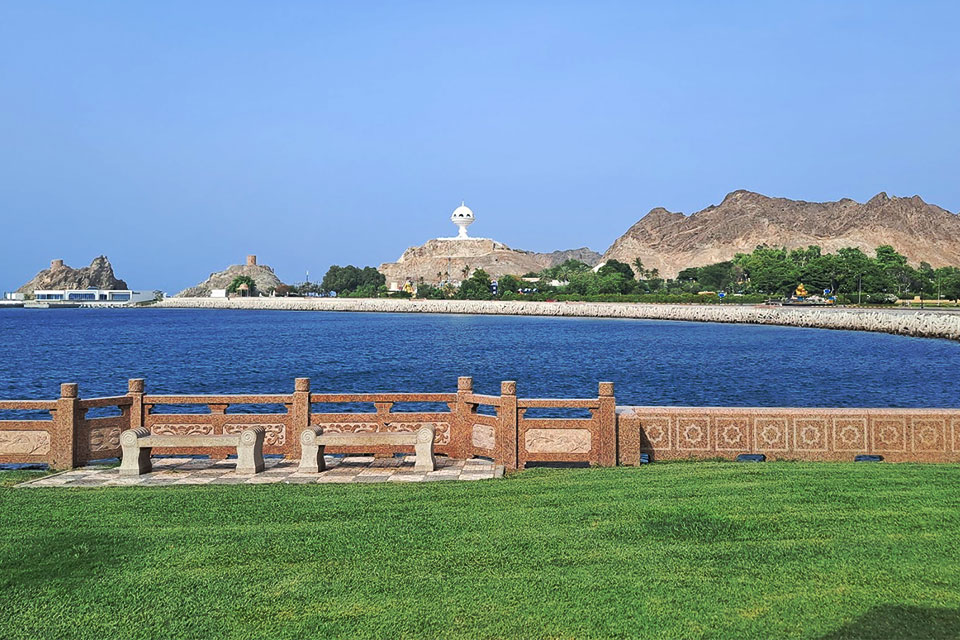
This journey is to Muscat. Traveling from Dubai to Oman is quite a unique experience. Overall, it takes about four and a half hours by car to reach Muscat in Oman. Along the way, you’ll mostly see mountain ranges stretching on both sides of the road. After a while, some people might even start to feel a bit bored with the repetitive scenery. However, the well-maintained roads offer great comfort. There is also less traffic on these routes, mainly because these roads are primarily used for travel to Oman compared to others.
To travel from the UAE to Oman, you can obtain a visa online. Alternatively, you can get a visa at the Oman border. Crossing the borders of both countries, including the necessary checks, usually takes around 30 minutes. After that, the rest of the journey continues within Oman.
Muscat is the capital of Oman and also its largest city. It is considered one of the oldest cities in West Asia, with a history of trade dating back to the 2nd century AD, when it had commercial ties with Greece. Even today, trade remains the backbone of Muscat’s economy. Although Oman does not have a railway system, it has an excellent road network along with public transportation facilities.

Not just roads and buildings, you can also spot small streams in many parts of Muscat, especially in areas close to the sea. Star hotels are often located near the beaches, which are much less crowded compared to those in Dubai.
However, the Mutrah Corniche gets quite crowded in the evenings, especially on holidays and weekends. From the Corniche, you can enjoy distant views of ships out at sea.

Opera Galleria:
The Royal Opera House Muscat features a premium shopping destination known as the Opera Galleria. It offers a range of luxury shops, international brands, cafés, and dining options. Around 50 outlets showcase art, jewelry, fashion, and perfumes. The Royal Opera House itself is a leading cultural institution in Oman, aiming to enrich lives through diverse artistic, cultural, and educational programs while promoting cultural tourism.
Along the roads, you’ll notice large buildings designed in traditional Arabic architectural style, many of which are office spaces. Numerous gardens line the streets, with lush greenery and landscaped flower beds appearing frequently. Compared to other Gulf cities like Dubai, traffic in Muscat is noticeably lighter. Mountains are visible almost everywhere, giving the impression of a city surrounded by hills. Various architectural styles can be seen on both sides of the roads, and there is a consistent effort to plant trees along the streets to provide shade. The roadsides are also very well maintained and clean.
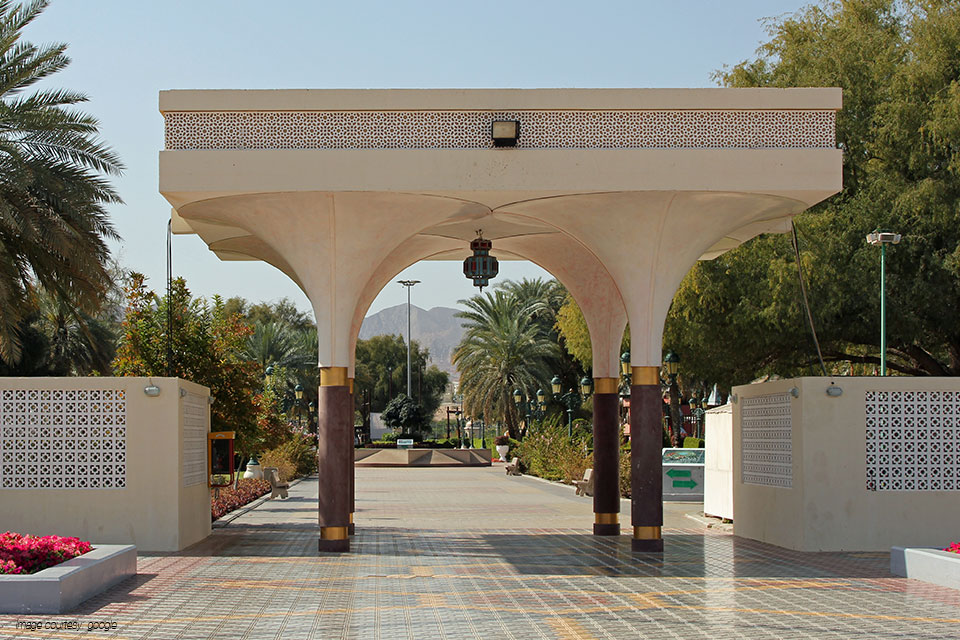
Qurum Natural Park:
One of Muscat’s major attractions is the Qurum Natural Park. Filled with beautiful gardens, it is one of the best places in the city for a day picnic. Spanning a vast area, it’s not easy to explore the entire park on foot. A large lake with boating facilities is one of its highlights. The park is rich with trees, often filled with the sounds of birds. There’s also a small amusement area for children. Almost every visitor to Muscat makes it a point to visit this park. Its sheer size is what amazes most people. The plants and surroundings are neatly maintained, with trimmed greenery and well-designed pathways. Decorative structures and lighting further enhance its beauty..
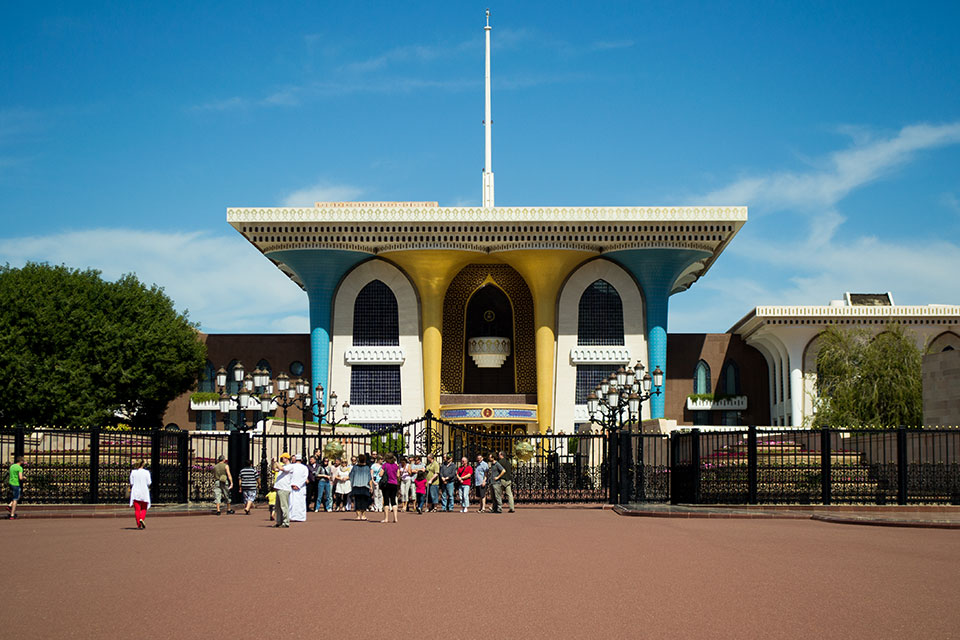
Al Alam Palace:
The Al Alam Palace is used for ceremonial purposes by Sultan Qaboos bin Said Al Said. It is one of the Sultan’s six residences and has a history of over 200 years. Although the original structure is old, the current palace-with its striking gold and blue façade-was rebuilt in 1972 as a royal residence. Visitors are allowed to stop near the gates and take photographs. The palace is used for official ceremonies and to distinguished guests. For example, in January 2012, Sultan Qaboos received Queen Beatrix here during her visit to Oman.
The palace is surrounded by the 16th-century forts of Al Mirani Fort and Al Jalali Fort, built by the Portuguese. Enclosed by these massive forts, the royal palace stands tall and majestic, reflecting the grandeur of Oman’s history.

