

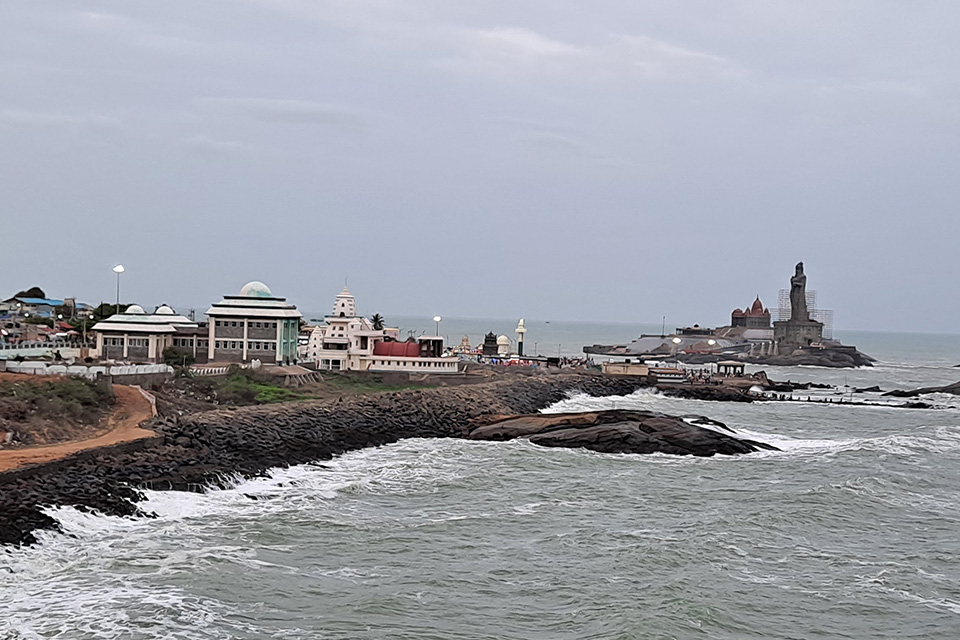
Kanyakumari got its name from the Kumari Amman Temple, located on the coast where the Bay of Bengal, the Arabian Sea, and the Indian Ocean meet. For centuries, Kanyakumari has been a spiritual and cultural center. It was also an important trade hub. The Chera, Chola, Pandya, and Nayak kings ruled Kanyakumari at different periods in history.
In 1947, Travancore joined the Indian Union, bringing royal rule to an end. In 1949, when the Travancore-Cochin state was formed, Kanyakumari also became part of Travancore-Cochin. In 1956, states were reorganized on the basis of language, and Kanyakumari was merged with the state of Tamil Nadu.
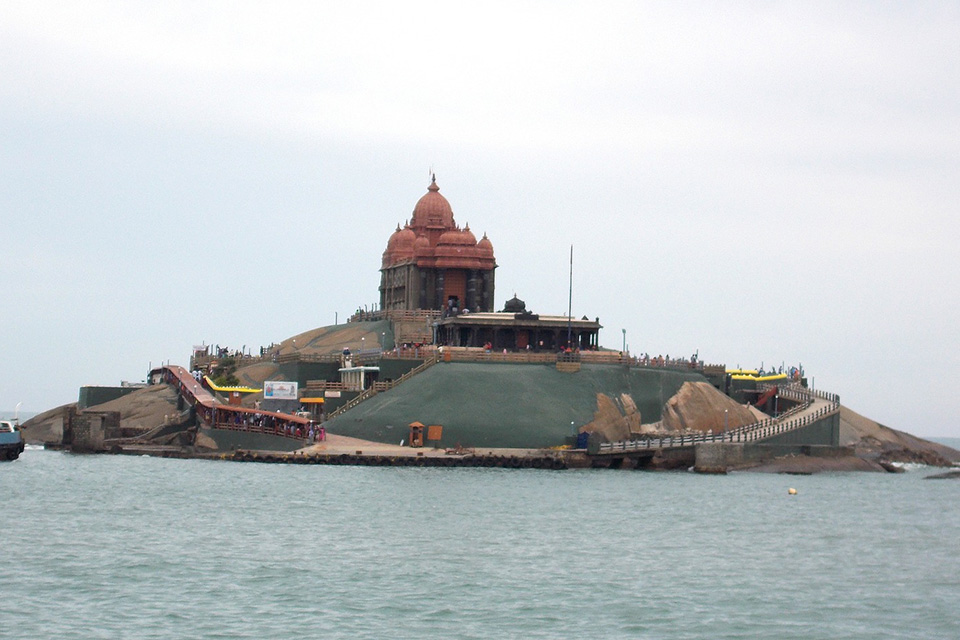
One of the two rocky islets located about 500 meters into the sea from Vavathurai Cape in Kanyakumari is the famous Vivekananda Rock. Swami Vivekananda is believed to have swum across the sea and meditated there on December 23, 24, and 25 in 1892.
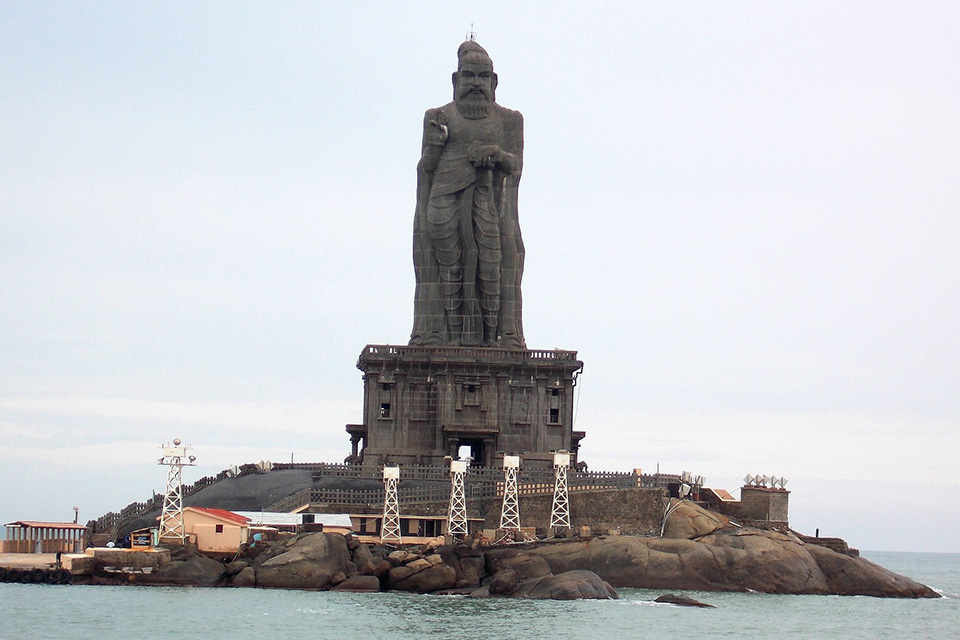
Another major attraction there is the Thiruvalluvar Statue. It is a 133-foot-tall stone sculpture of Thiruvalluvar – the Tamil poet, philosopher, author of the Tirukkural, and a symbol of moral values and spiritual purity.
The Gandhi Memorial Mandapam was later built at the place where Mahatma Gandhi’s ashes were kept for public homage before being immersed in the sea. Constructed in the style of traditional temples, it is designed so that the first rays of the sun fall on the exact spot every year on October 2, Gandhi Jayanthi day.