

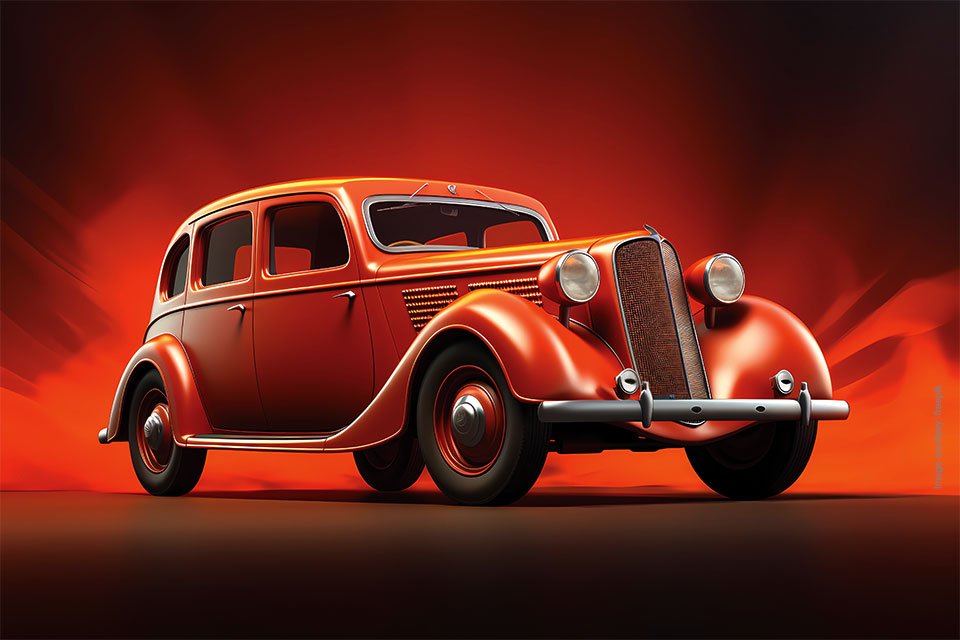
One of the inventions that has most transformed human life is the car. Today, it has become an essential component of transportation and development, but it was not created overnight. Modern cars are the result of centuries of effort and innovation.
Early Attempts:
The history of cars begins in the second half of the 18th century. In 1769, a steam-powered vehicle built by Nicolas-Joseph Cugnot in France is considered the starting point. This three-wheeled vehicle was mainly used for military purposes, especially to transport heavy artillery. However, its speed was only about 4-5 kilometers per hour. Its major drawbacks included the need for frequent refueling, loud noise, and excessive heat.
At the same time, experiments were being conducted in countries like Britain, Germany, and the United States. Steam-powered vehicles could not travel efficiently on regular roads, so they failed to gain widespread acceptance. Road conditions and safety systems were also underdeveloped.
Many experts attempted to build smaller engine-powered vehicles, but none succeeded in achieving widespread use. Although steam vehicles marked the beginning of automotive history, they laid a strong foundation for future advancements.
The Birth of the Modern Car:
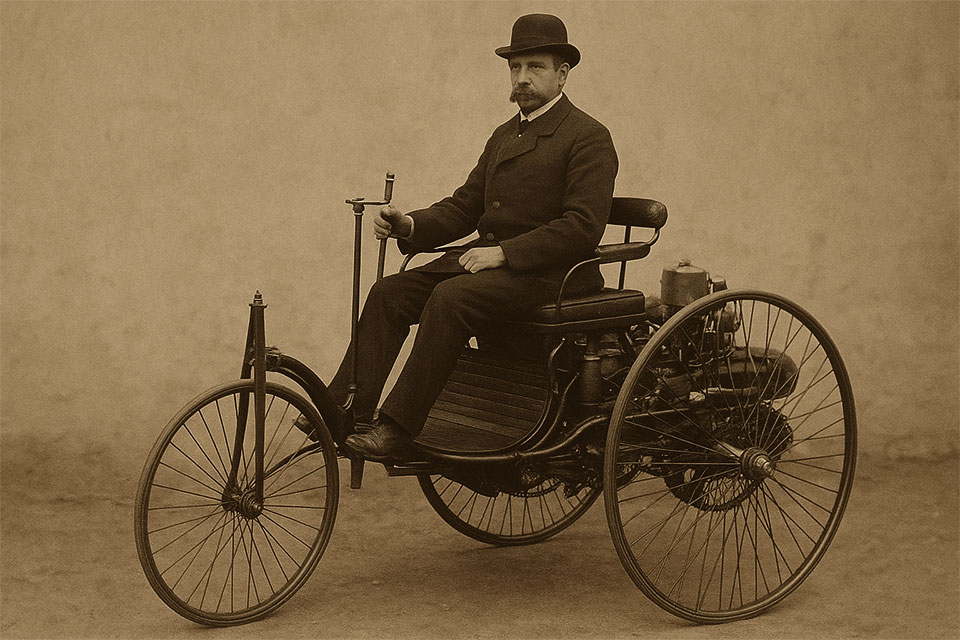
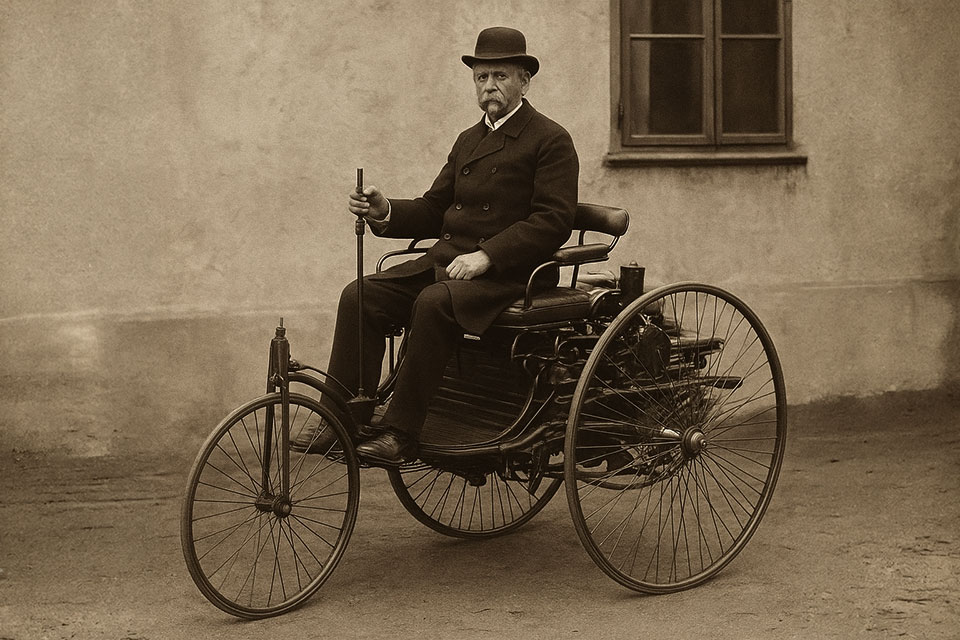
After steam vehicles proved impractical for public use, vehicles based on the internal combustion engine paved the way for the future of transportation. In 1886, German engineer Karl Benz introduced the Benz Patent Motorwagen, widely recognized as the world’s first petrol-powered car.
This three-wheeled vehicle had a small engine with about 0.75 horsepower. Despite its simplicity, it became one of the greatest inventions in history as a self-propelled, driver-controlled vehicle.
In 1888, Bertha Benz, Karl Benz’s wife, made a historic journey of over 100 kilometers in this car. This event became a major milestone in automotive history, proving the car’s reliability and practicality to the world.
Meanwhile, German engineers Gottlieb Daimler and Wilhelm Maybach also played key roles in developing petrol engines. Their high-speed engines and two- and four-wheeled vehicles later inspired the growth of the automobile industry.
These innovations gave life to the concept of the “modern car.” The Benz Patent Motorwagen of 1886 is considered the starting point of the global automobile industry.
Ford and the Assembly Line Revolution:
In 1908, American industrialist Henry Ford introduced the Model T, marking a major turning point in automotive history. By using assembly line production, manufacturing costs were reduced, production speed increased, and cars became affordable for ordinary people.
The dream of “a car in front of every American home” became a reality.

Global Expansion:
By the mid-20th century, cars spread beyond Europe and America to Asia, Africa, and Latin America. Many companies entered the competition-General Motors, Mercedes-Benz, Toyota, Honda, Fiat, and others became widely popular.
Technological Advancements:
Significant progress was made in safety, speed, comfort, and design. Safety features like airbags, seat belts, and advanced braking systems made travel much safer. At the same time, various categories emerged, including luxury cars, sports models, and off-road vehicles.